Design or be designed
Designing Play, Designing Participation
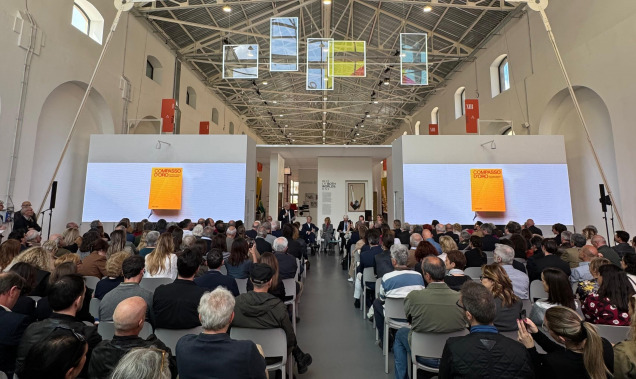
During Milano Design Week 2026, Design Group Italia presented the second chapter of Design or Be Designed, an initiative that explores how design can help people better understand and shape the systems that influence their everyday lives.
This year’s edition focused on a simple but powerful question: what happens when young people are directly involved in designing experiences for their own communities?
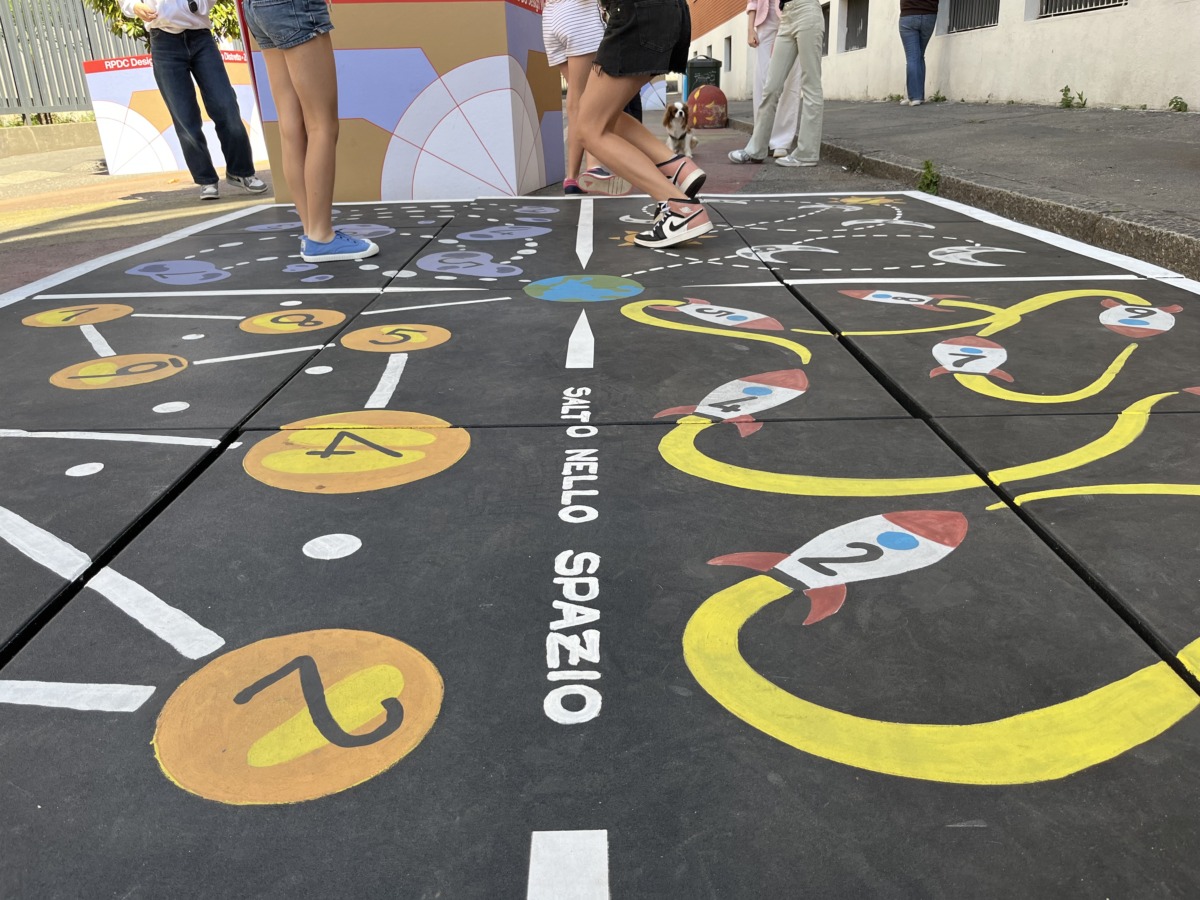
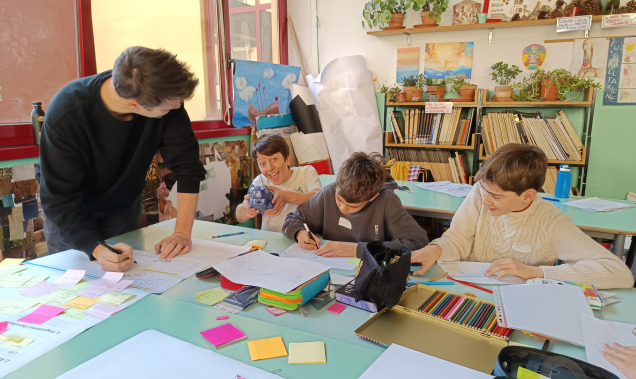
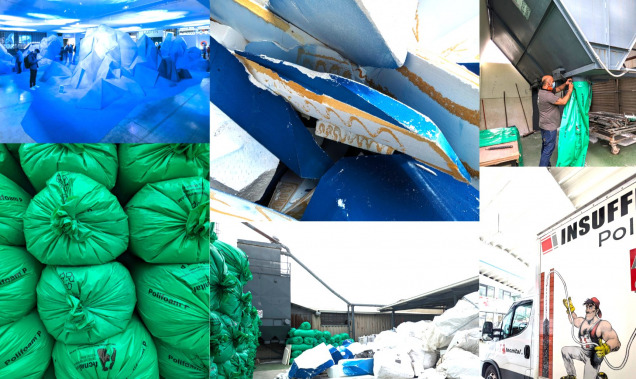
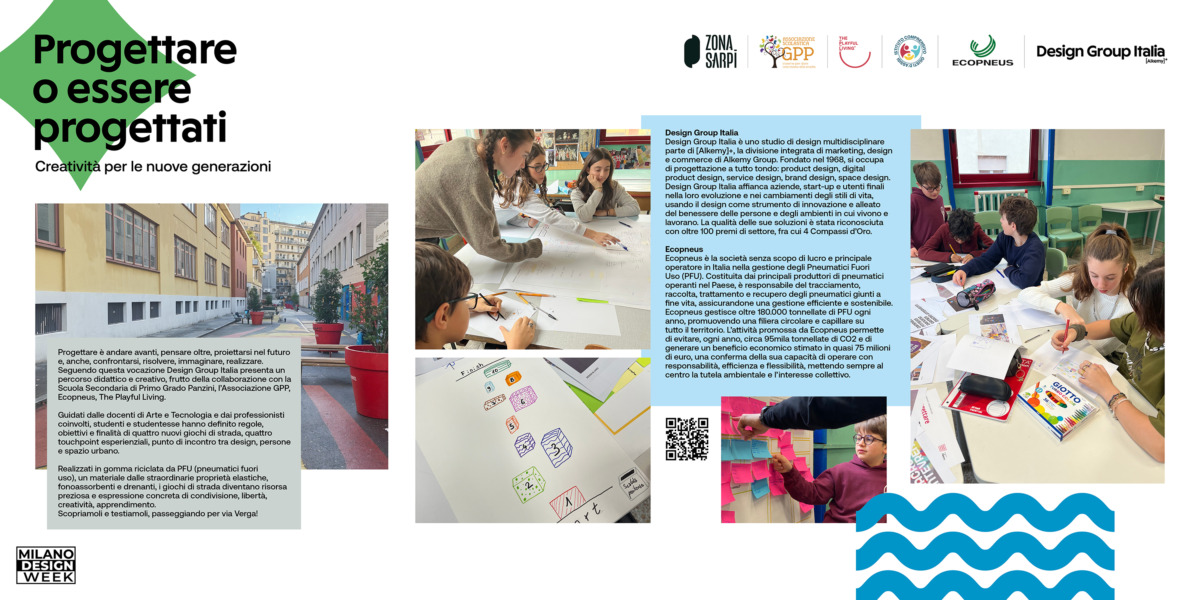
To explore this topic, we worked with 22 students from the Panzini middle school in Milan, alongside Ecopneus, Associazione GPP and The Playful Living. Together, we developed four street games designed to encourage interaction, participation and shared use of public space.
Introducing Design Through Practice
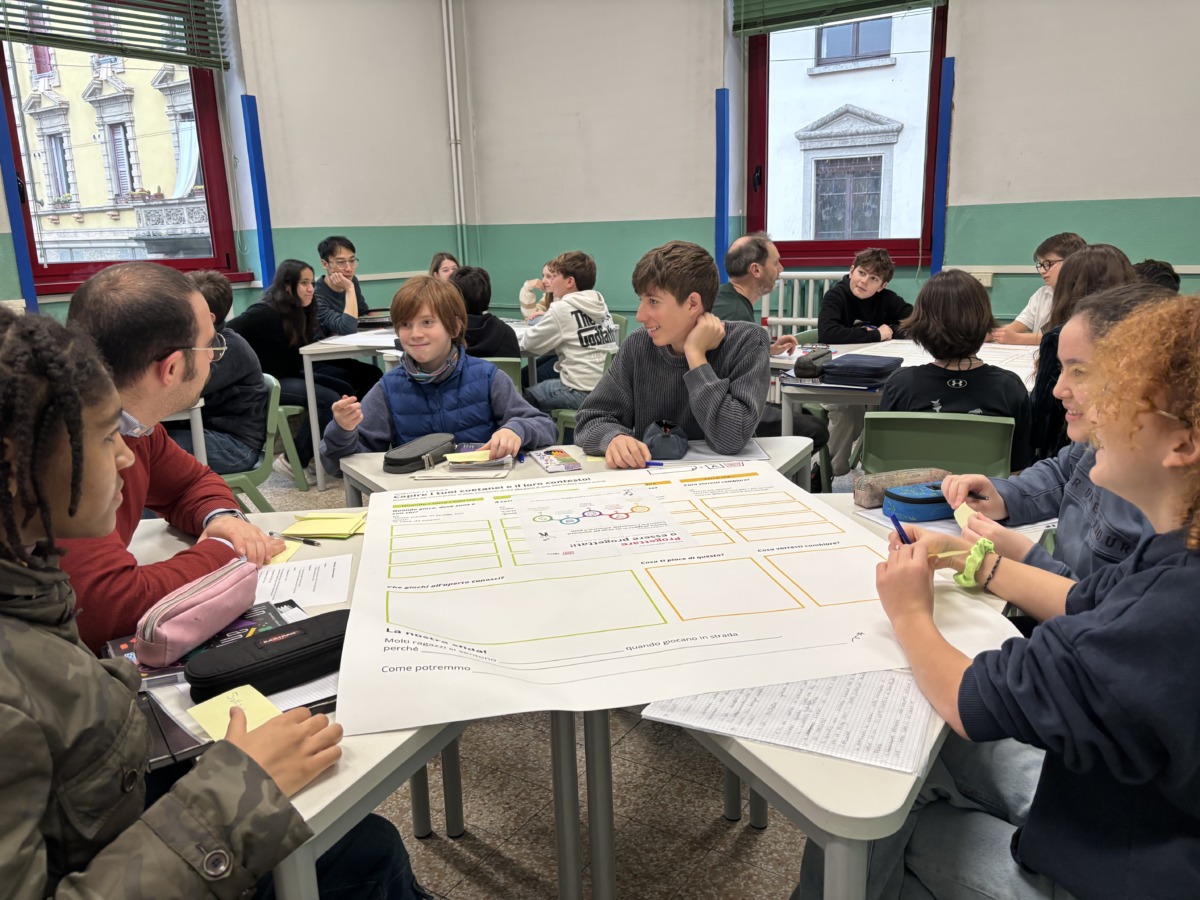
The project was built around a series of workshops designed to introduce students to the key stages of the design process. Rather than learning design through theory alone, participants were encouraged to work on a real challenge: reimagining traditional street games for a contemporary urban context. Through activities including observation, idea generation, prototyping and testing, students experienced first-hand how design can be used as a tool to analyse needs, solve problems and create meaningful experiences.
The objective was not simply to develop a final installation, but to help participants understand how design decisions influence the way people interact with products, services and environments.
Four Games for Public Space
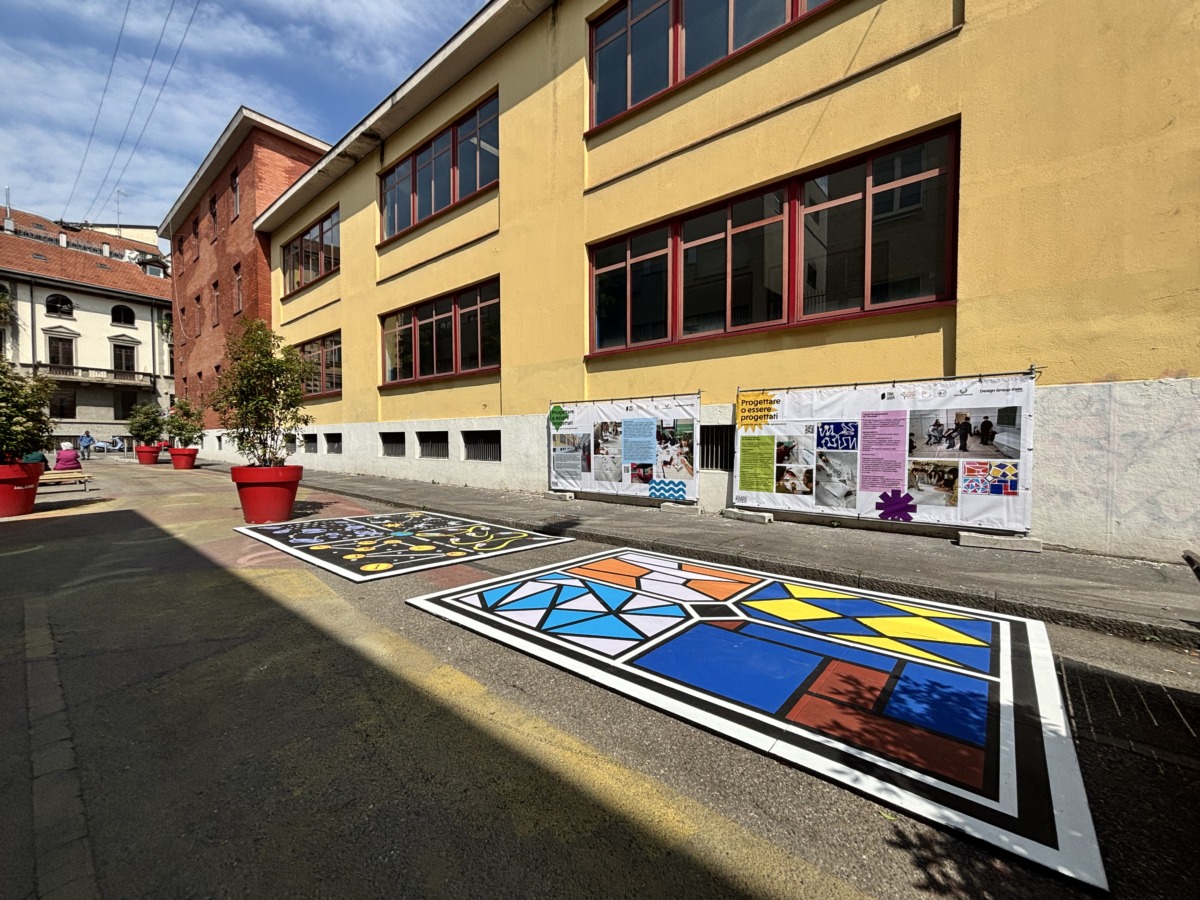
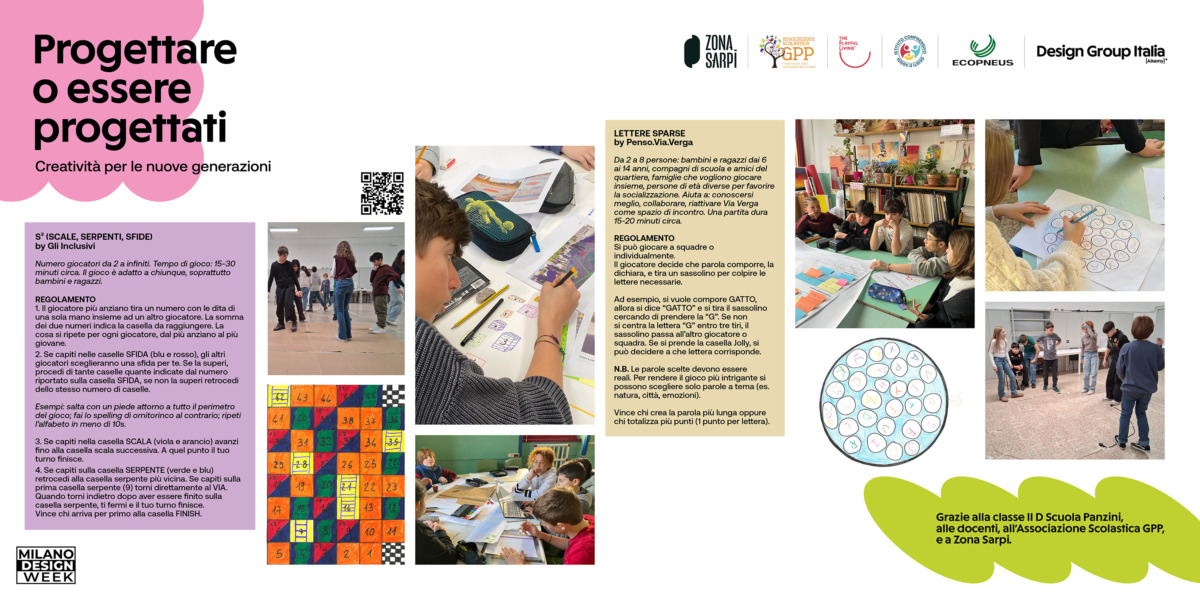
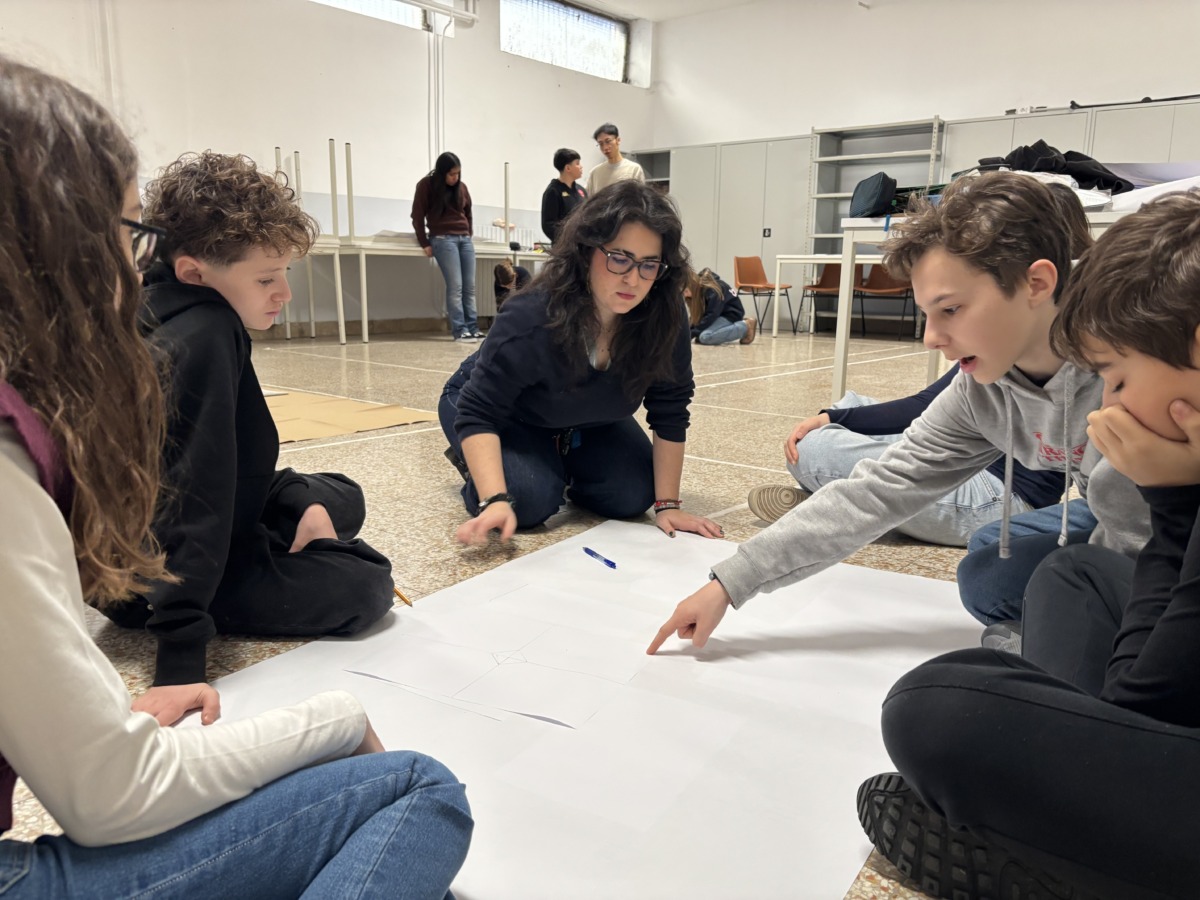
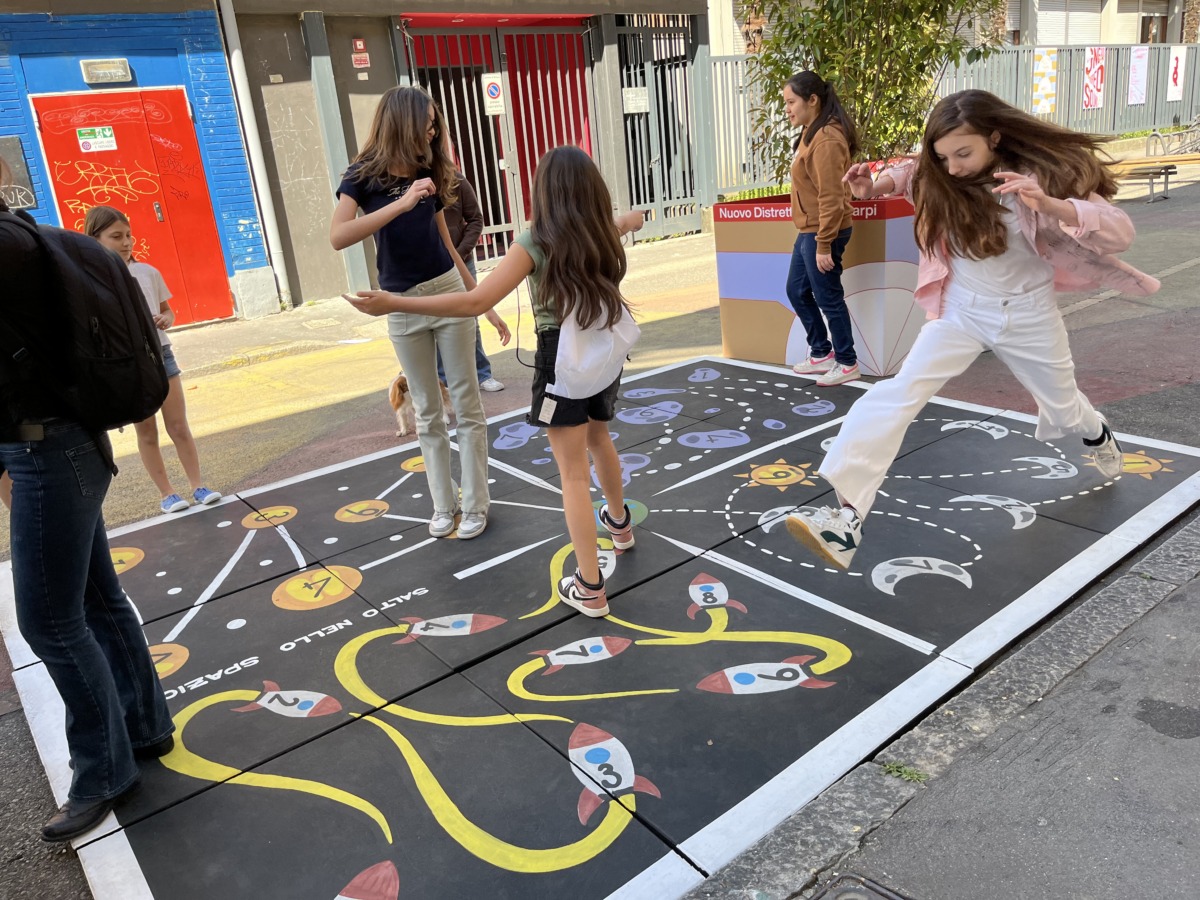
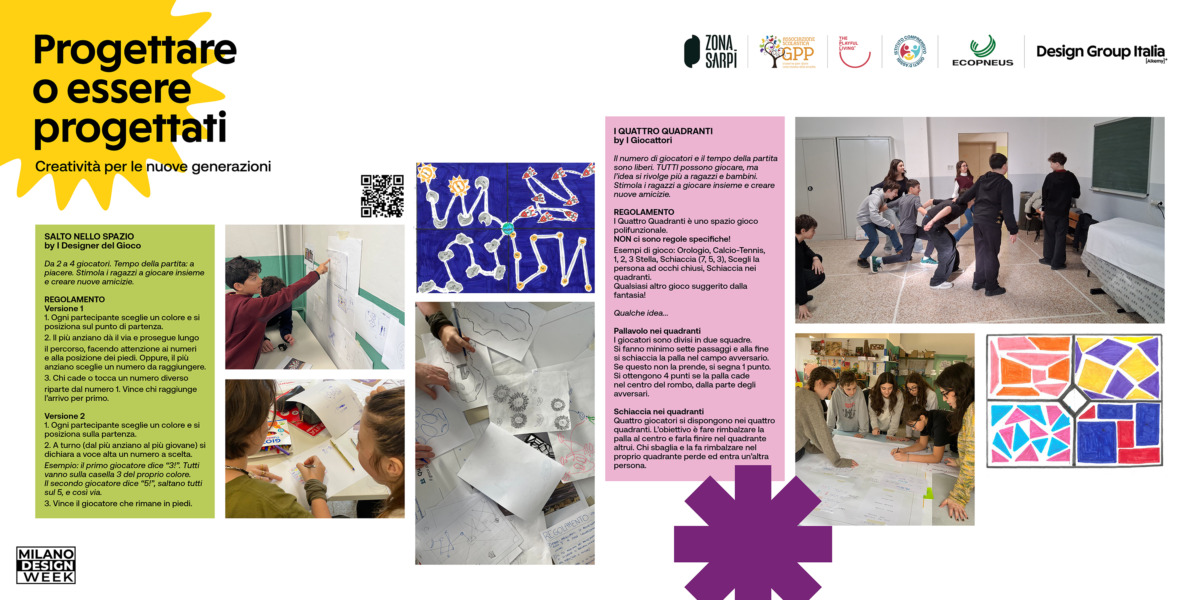
The outcome of the project was a collection of four interactive installations: Lettere Sparse, Salto nello Spazio, Quattro Quadranti and S³ (Scale, Serpenti, Sfide). Presented during Milano Design Week on Via Giovanni Verga, the games transformed a section of the city into a temporary space for play and social interaction.
Although each installation had its own rules and mechanics, they shared a common goal: encouraging people of different ages to participate, collaborate and engage with the surrounding environment.
Co-Design as a Learning Experience
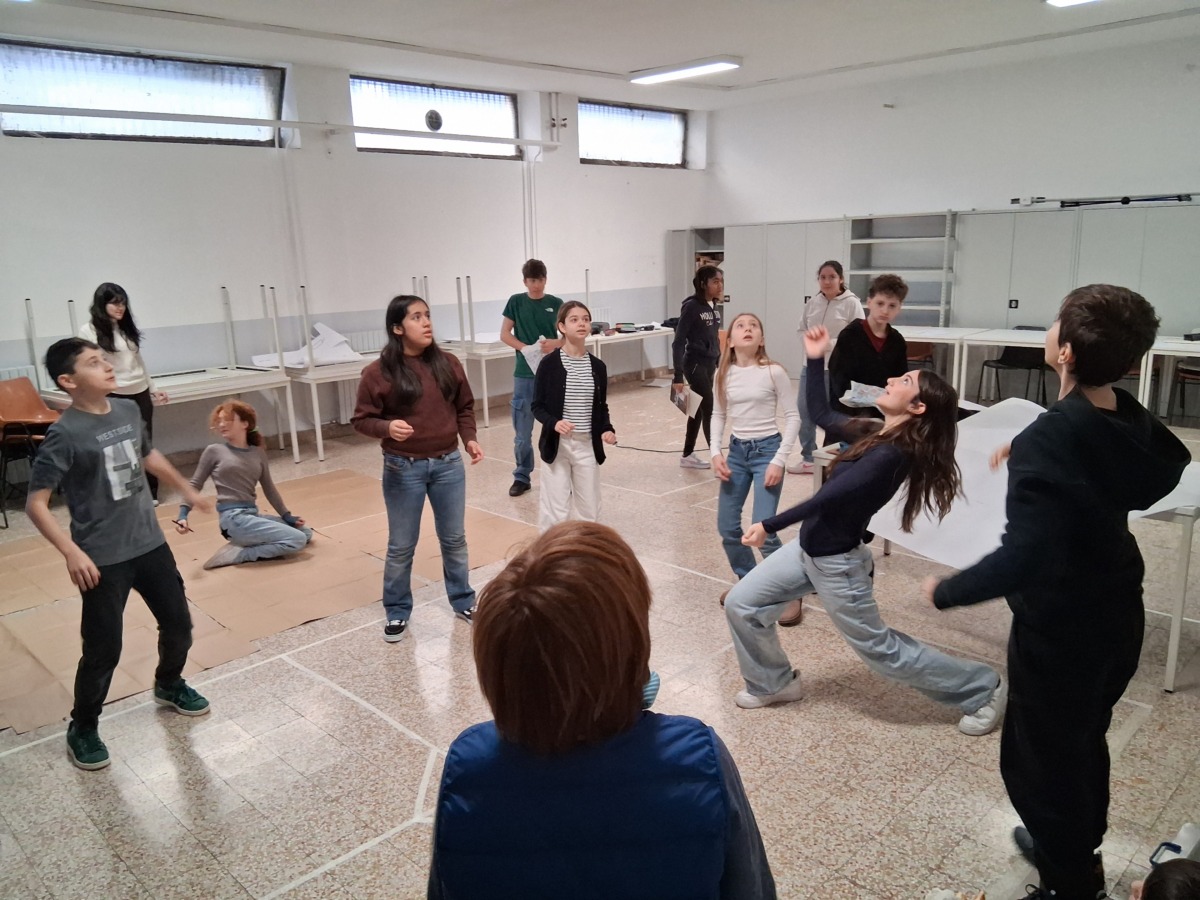
One of the most significant aspects of the initiative was the role played by the students throughout the process. Rather than being asked to respond to predefined solutions, participants contributed ideas, tested concepts and influenced the final outcomes. Their observations and perspectives became an essential part of the design process.
For us, this approach reflects a broader belief that effective design requires involving people in the creation of the experiences that affect them. Co-design is not only a methodology for developing better solutions; it is also a way of building awareness, responsibility and agency. By engaging directly with the design process, students gained a practical understanding of how ideas move from concept to implementation and how design can be used to address real-world challenges.
Creating a Lasting Impact
While the installations were originally created for Milano Design Week, the project was conceived with a longer-term perspective. Thanks to the collaboration between all project partners, the games will continue to be available within the school’s outdoor spaces, allowing students to keep using and interacting with them beyond the event itself.
This ongoing presence extends the value of the initiative, transforming a temporary exhibition into a resource for everyday school life.